
HSBC RedCoin Stablecoin Reaches 50,000 Users Following Hong Kong Launch
HSBC's Hong Kong dollar-backed stablecoin has attracted 50,000 users within ten days of launching, marking an encouraging start for the banking giant's entry into regulated digital asset payments.
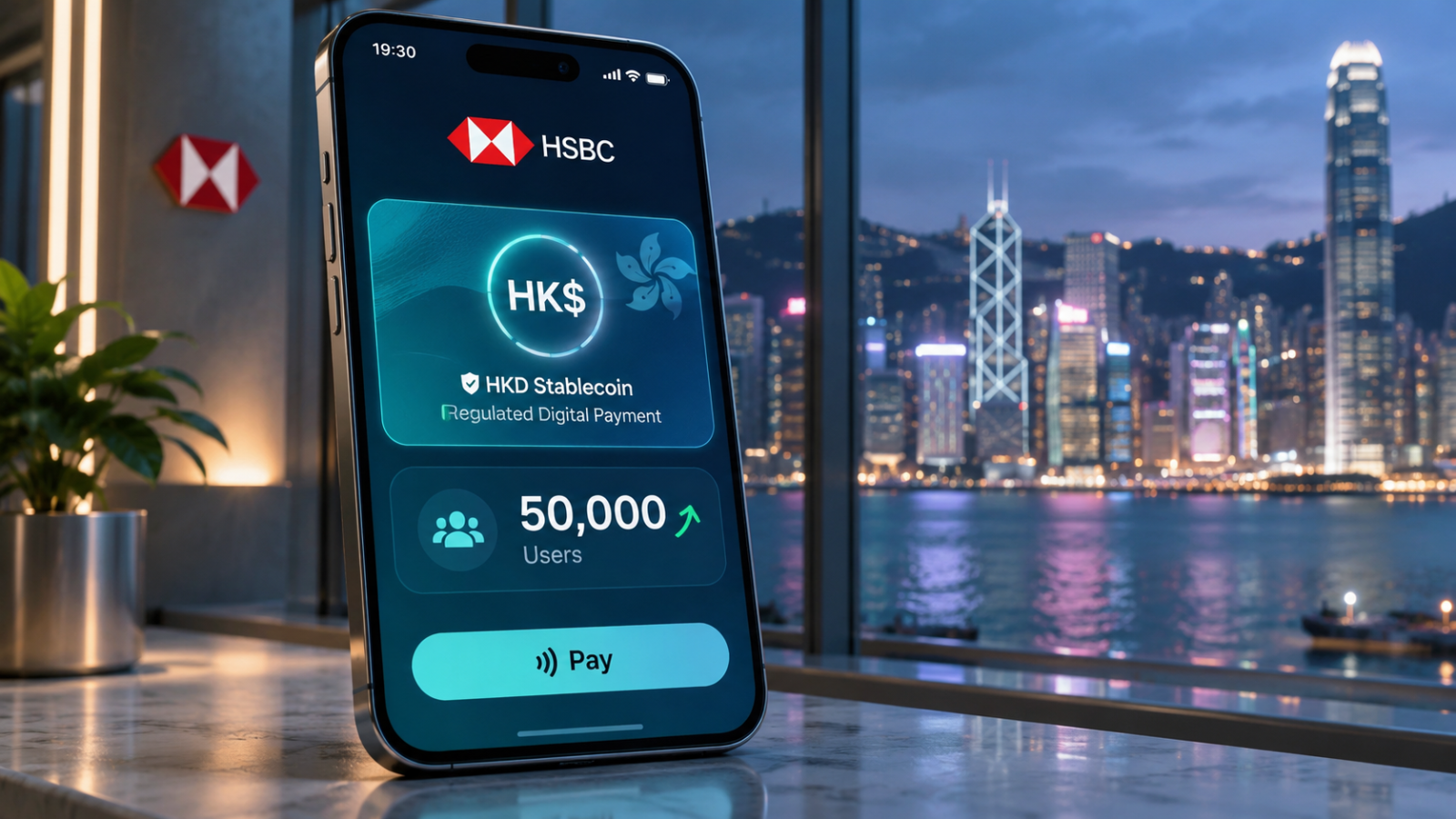
HSBC Group CEO Georges Elhedery confirmed the adoption figures during Hong Kong FinTech Week on November 2, revealing that the bank's RedCoin stablecoin had reached the milestone following its October 23 launch. The digital currency, operating under the ticker RCHKD, was introduced through HSBC's existing PayMe payment application.
The launch represents a significant development in Hong Kong's regulated stablecoin market, with HSBC holding one of just two issuer licences awarded by the Hong Kong Monetary Authority (HKMA). By integrating the token into an established payments platform, the bank has provided customers with access to cryptocurrency-based transactions without requiring a separate digital wallet application.
RedCoin Brings Stablecoin Payments To Existing Customers
RedCoin is pegged to the Hong Kong dollar, with each token designed to maintain a value of HK$1 and be redeemable for the equivalent amount in traditional currency. Unlike cryptocurrencies such as Bitcoin and Ethereum, its value is intended to remain stable rather than fluctuate according to market demand.
The stablecoin operates within PayMe, which has more than 3.3 million users in Hong Kong. Customers can activate a RedCoin wallet directly through the application, allowing them to transfer tokens to other users or make payments at more than 100,000 merchants within the existing PayMe network.
This approach gives HSBC access to an established customer base and payment infrastructure, removing some of the barriers associated with adopting cryptocurrency services. Customers do not need to establish accounts with external exchanges or manage wallets on public blockchain networks to use the token.
The bank is also planning to expand RedCoin's availability through its Hong Kong mobile banking application, alongside additional services involving tokenised investment products.
Hong Kong's Strict Stablecoin Licensing Framework
HSBC received its stablecoin issuer licence from the HKMA on April 10, 2026, becoming one of only two successful applicants from a total of 36 institutions seeking authorisation. The bank operates under licence number FRS02, reflecting Hong Kong's selective approach to regulating stablecoin issuance.
The regulatory framework establishes requirements covering reserve assets, redemption arrangements, operational safeguards and financial risk management. These measures are intended to support consumer protection while allowing licensed financial institutions to develop new digital payment services.
HSBC subsequently unveiled the RedCoin name on September 30, following research into consumer awareness of stablecoins. A survey conducted by the bank found that 74% of respondents recognised at least one potential application for the technology, including digital asset trading, payments and international transfers.
Rather than operating on a public blockchain such as Ethereum, RedCoin uses a private, permissioned blockchain built on Hyperledger Besu technology. The network remains under HSBC's control, restricting participation and transactions to the bank's authorised infrastructure.
Independent verification of the stablecoin's reserves is expected following the fourth quarter of 2026, providing an additional measure of transparency around the assets supporting tokens in circulation.
Early Adoption Highlights Potential For Bank-Issued Stablecoins
The addition of 50,000 users within ten days provides an early indication of consumer interest in HSBC's digital currency. However, the initial adoption figures do not establish how frequently customers are conducting transactions or whether they will continue using the service over the longer term.
Transaction volumes, repeat payments and the total value of RedCoin in circulation will provide more substantial indicators of its commercial performance as the service develops.
The launch also illustrates how established financial institutions can introduce blockchain-based products through existing banking and payment services. While cryptocurrency companies have traditionally relied on dedicated exchanges and digital wallets to attract customers, HSBC can distribute its stablecoin through an application already used by millions of people.
Nevertheless, RedCoin's restricted blockchain infrastructure distinguishes it from stablecoins circulating across public cryptocurrency networks. The token is currently designed primarily for transactions within HSBC's approved payment ecosystem rather than unrestricted transfers between decentralised finance platforms.
HSBC's expansion plans are expected to include broader access through its banking services and additional tokenised financial products. The introduction of these capabilities, alongside further licensing decisions by Hong Kong regulators, will help determine whether bank-issued stablecoins can establish a significant position in everyday retail payments.
The initial response to RedCoin suggests that established banking networks could play an increasingly influential role in the development of regulated stablecoin services, particularly in markets where financial authorities have introduced dedicated licensing frameworks.
Related reading

Consensys Launches Blockchain Settlement Platform For Financial Institutions
Blockchain technology company Consensys has launched a new interoperability platform designed to help banks and financial institutions settle transactions across separate blockchain networks without transferring assets away from their existing ledgers.
iG Crypto News · 3 November 2026
Coinbase Closes Gap On Robinhood In Tokenised Stock Trading
Coinbase has emerged as the second-largest issuer of tokenised stocks by weekly trading volume on decentralised exchanges, capturing 26.7% of the market as competition with Robinhood intensifies.
iG Crypto News · 2 November 2026
Nvidia And Microsoft Among 50 Companies Opposing OKX-ICE Stock Tokenisation
Fifty publicly traded companies have objected to plans by cryptocurrency exchange OKX and New York Stock Exchange owner Intercontinental Exchange to offer tokenised versions of their shares, creating a significant obstacle for the proposed blockchain-based trading platform.
iG Crypto News · 2 November 2026
KAST Cancels Token Launch In Favour Of Pioneer Units
Singapore-based fintech company KAST has abandoned plans to launch its own cryptocurrency token, announcing that existing customer reward points will instead be converted into non-tradable KAST Pioneer Units under a revised loyalty programme.
iG Crypto News · 2 November 2026