
Nvidia And Microsoft Among 50 Companies Opposing OKX-ICE Stock Tokenisation
Fifty publicly traded companies have objected to plans by cryptocurrency exchange OKX and New York Stock Exchange owner Intercontinental Exchange to offer tokenised versions of their shares, creating a significant obstacle for the proposed blockchain-based trading platform.
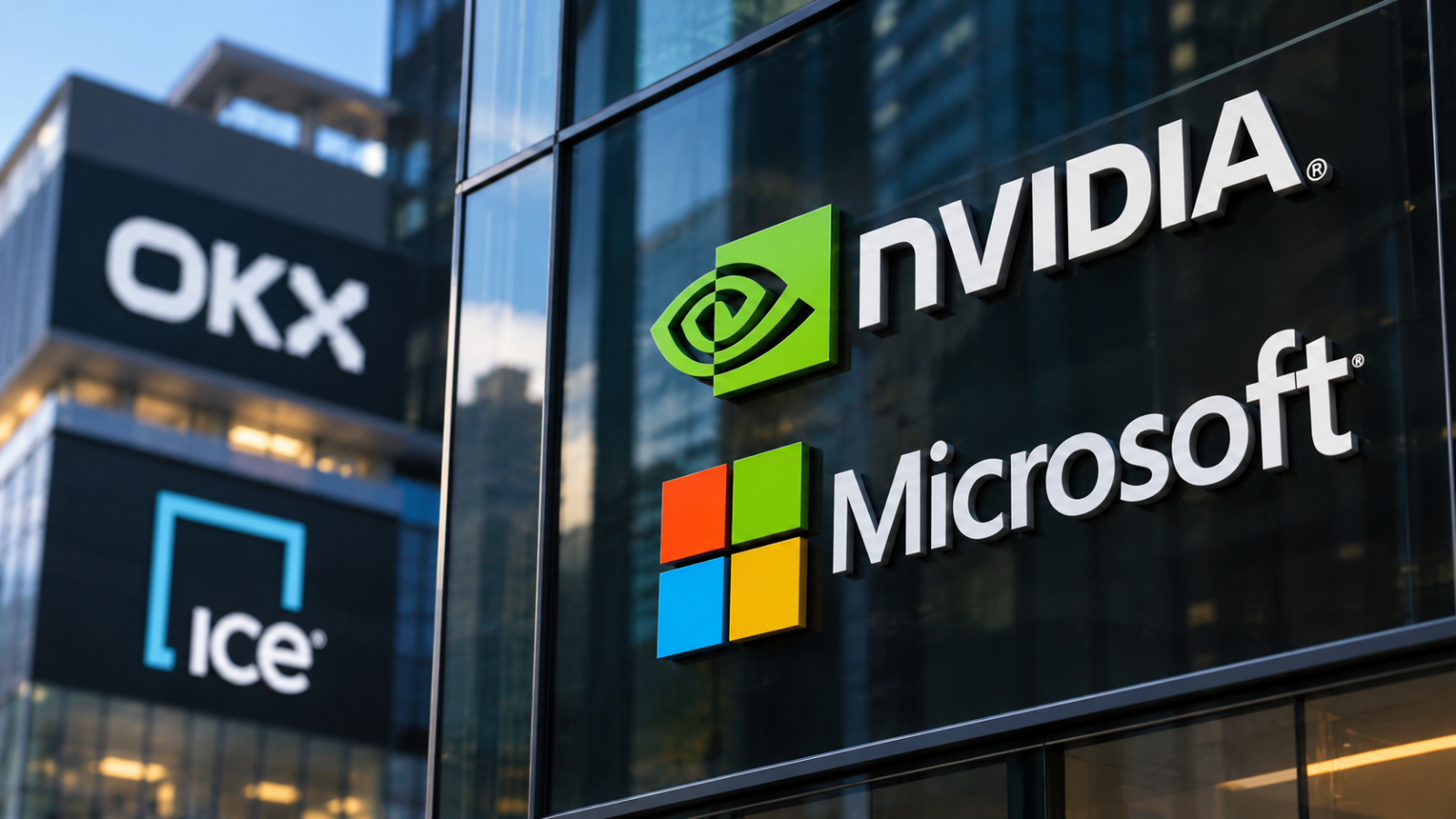
Nvidia, Nike, Costco, Micron and Reddit are among the latest businesses to oppose the initiative, bringing the number of objecting companies to 50, according to an updated disclosure dated October 30. The objections concern OKXICE, a joint venture established to develop a regulated marketplace for tokenised US securities.
The venture initially identified 62 companies whose shares could potentially be offered through its Tokenized Securities Venue (TSV). Of the 50 companies that have since objected, 43 appeared on that original list, representing approximately 69% of the proposed issuers. The remaining seven objectors were not included in the initial selection.
Major US Companies Reject Tokenised Stock Trading Plans
OKXICE is a 50-50 joint venture between cryptocurrency exchange OKX and Intercontinental Exchange (ICE), the parent company of the New York Stock Exchange. Its proposed platform would enable investors to trade blockchain-based representations of publicly listed US shares, combining traditional equity ownership with cryptocurrency settlement technology.
The growing list of objectors includes major technology companies such as Alphabet, Microsoft, Nvidia, Intel and AMD, alongside financial institutions including JPMorgan Chase, Goldman Sachs and Wells Fargo. Consumer brands and retailers have also raised objections, with Nike, Costco, Walmart, Coca-Cola and McDonald's among the businesses opposing the proposed arrangements.
The latest disclosure added 12 companies to the list, increasing the total from 38 on October 28 to 50 by October 30. The objections represent a considerable challenge for a platform seeking to attract investors by offering access to shares in some of America's largest publicly traded businesses.
However, the companies have not publicly detailed their individual reasons for objecting. Their decisions also do not necessarily indicate opposition to blockchain-based securities in general, as the regulatory process concerns tokenisation by unaffiliated third parties through this particular trading venue.
How The OKXICE Tokenised Securities Platform Would Operate
Under the proposed arrangement, each tokenised share would be backed on a one-for-one basis by an underlying security held through a registered broker-dealer. Investors would retain the economic and legal rights associated with conventional share ownership, including dividend payments, voting rights and claims on company assets in the event of liquidation.
Unlike traditional stock exchanges, which operate during designated trading sessions, OKXICE intends to provide continuous trading availability. Transactions would take place through permissioned Uniswap v4 liquidity pools operating on OKX's X Layer blockchain, allowing tokenised securities to be exchanged against stablecoins including USDC, USDT and USDG.
The system would replace the conventional brokerage order book with blockchain-based liquidity pools, although participation would remain subject to regulatory controls. Investors would need approved digital wallets and would be required to complete identity verification, anti-money laundering checks and sanctions screening before accessing the platform.
The joint venture is seeking to operate under the US Securities and Exchange Commission's Innovation Exemption framework, which provides conditional regulatory relief for certain tokenised securities trading arrangements. The framework allows eligible operators to pursue new blockchain-based market structures without following every requirement applicable to conventional national securities exchanges.
SEC Rules Allow Companies To Block Third-Party Tokenisation
A central feature of the regulatory framework is the right of publicly listed companies to object when unaffiliated businesses seek to create and trade tokenised representations of their shares. Eligible platforms must notify the underlying issuer, which then has 30 calendar days to submit a written objection.
Where an objection is submitted within the required period, the platform cannot offer the affected third-party tokenised shares under the exemption. This gives issuers an opportunity to influence how their securities are represented and distributed through emerging blockchain trading systems, even when the underlying shares are already available on conventional exchanges.
For OKXICE, the scale of the opposition has introduced uncertainty over the range of securities it will be able to offer at launch. Although 50 companies have objected, the figure does not mean that only 12 of the original 62 issuers remain available, because seven objections concern companies outside the initial selection.
The venture has not confirmed a launch date for its proposed trading platform, and its eventual offering will depend on regulatory compliance and the outcome of issuer notifications.
The dispute highlights an emerging challenge for the tokenisation of real-world assets, particularly where cryptocurrency businesses seek to create blockchain-based versions of established financial securities without direct involvement from the issuing companies. While tokenisation offers the prospect of continuous trading and more flexible settlement arrangements, the OKXICE experience demonstrates that issuer participation and regulatory approval remain important considerations for the development of these markets.
Related reading
Coinbase Closes Gap On Robinhood In Tokenised Stock Trading
Coinbase has emerged as the second-largest issuer of tokenised stocks by weekly trading volume on decentralised exchanges, capturing 26.7% of the market as competition with Robinhood intensifies.
iG Crypto News · 2 November 2026
KAST Cancels Token Launch In Favour Of Pioneer Units
Singapore-based fintech company KAST has abandoned plans to launch its own cryptocurrency token, announcing that existing customer reward points will instead be converted into non-tradable KAST Pioneer Units under a revised loyalty programme.
iG Crypto News · 2 November 2026
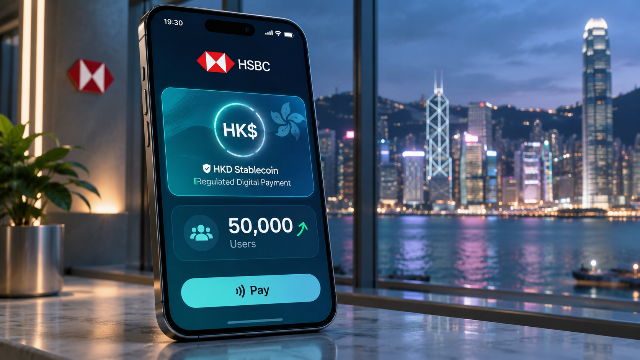
HSBC RedCoin Stablecoin Reaches 50,000 Users Following Hong Kong Launch
HSBC's Hong Kong dollar-backed stablecoin has attracted 50,000 users within ten days of launching, marking an encouraging start for the banking giant's entry into regulated digital asset payments.
iG Crypto News · 2 November 2026

Justin Sun’s PEPE Holdings Reach $51.25 Million
Justin Sun is PEPE’s largest identified individual holder, with holdings valued at $51.25 million, while no next memecoin purchase has been established.
iG Crypto News · 30 October 2026