
Vitalik Buterin Warns AI Could Threaten Cryptocurrency Security At Devcon 8
Ethereum co-founder Vitalik Buterin has warned that rapid advances in artificial intelligence could uncover mathematical vulnerabilities capable of undermining the cryptographic systems protecting Bitcoin, Ethereum and other digital assets.
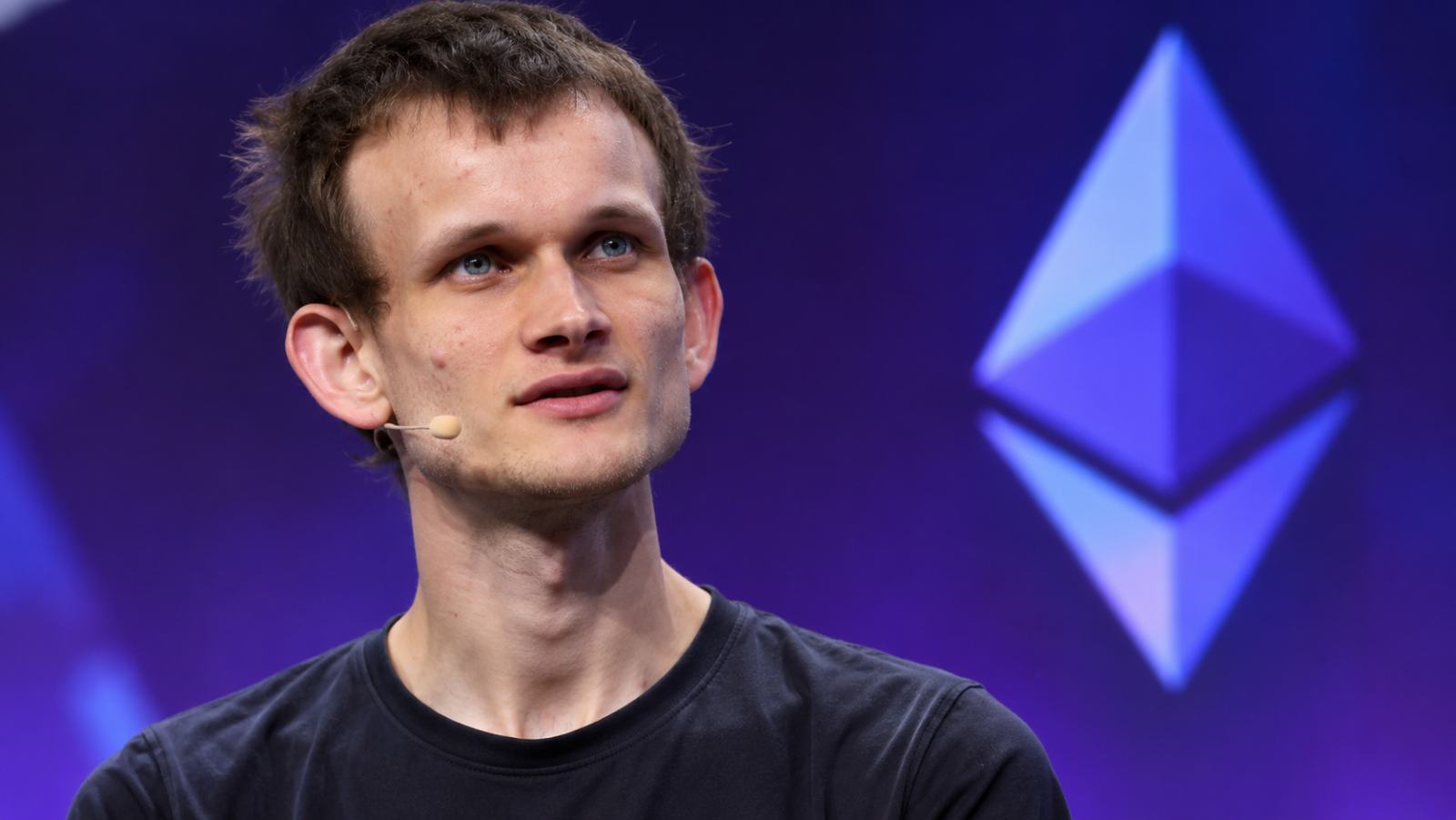
Buterin raised the concerns on November 3 as he opened Devcon 8 in Mumbai, India, suggesting that increasingly sophisticated AI systems could accelerate mathematical research sufficiently to discover weaknesses in encryption methods previously considered secure. His warning extends beyond the widely discussed threat of quantum computing, highlighting the possibility that artificial intelligence could identify previously unknown shortcuts in mathematical problems underpinning blockchain security.
The Ethereum co-founder also attracted attention for his unusual appearance at the conference, wearing a yellow smiley-face mask and a cloak decorated with eyes. However, his opening keynote focused on broader questions surrounding technological trust, cybersecurity and the importance of developing systems capable of protecting users against emerging threats.
AI Advances Raise Questions Over Blockchain Cryptography
Buterin's concerns centre on the mathematical foundations used to secure cryptocurrency transactions and protect private keys. Bitcoin and Ethereum rely on cryptographic techniques involving mathematical problems that are considered extremely difficult for conventional computers to solve, making them essential to the security of blockchain networks.
Among the examples highlighted by Buterin was the elliptic curve discrete logarithm problem (ECDLP), which underpins important aspects of public-key cryptography. He also identified cryptographic pairings, used in technologies including the signatures that allow Ethereum validators to participate in network consensus, as another area where undiscovered mathematical advances could present security challenges.
The concern is not that artificial intelligence has already broken these systems, but that sufficiently advanced AI could dramatically accelerate the discovery of new mathematical techniques. Research that might otherwise require several decades could potentially be completed in a much shorter period, exposing weaknesses before cryptocurrency developers have implemented appropriate safeguards.
Buterin illustrated the possibility by referring to the quadratic sieve, an algorithm developed in the early 1980s that substantially improved the efficiency of factoring large numbers. The development represented an important advance in computational mathematics and demonstrated how new algorithms can change assumptions about the difficulty of problems used in cryptographic security.
In a post on X, Buterin questioned whether similar breakthroughs might eventually emerge for elliptic curve cryptography, pairings and lattice-based mathematical systems. He suggested that AI could potentially compress more than 50 years of mathematical progress into five years, accelerating the discovery of algorithms that researchers have not yet identified.
Concerns Extend Beyond Quantum Computing
Cryptocurrency developers have increasingly focused on the long-term implications of quantum computing, which could eventually threaten several widely used public-key cryptographic systems. Researchers are developing post-quantum alternatives intended to remain secure against attacks involving sufficiently powerful quantum computers.
However, Buterin's warning suggests that replacing existing cryptographic systems may not eliminate every potential vulnerability. Some proposed post-quantum technologies rely on lattice-based mathematical problems, which are also believed to be computationally difficult but could theoretically become more vulnerable if researchers discover significantly more efficient algorithms.
The distinction is important because advances in artificial intelligence do not necessarily depend on the development of quantum hardware. AI-assisted mathematical research could identify weaknesses in existing assumptions using conventional computing infrastructure, potentially creating new challenges for blockchain security.
There is currently no publicly established algorithm capable of efficiently breaking the elliptic curve discrete logarithm problem at the security levels used by major cryptocurrency networks. Buterin's comments therefore describe a hypothetical future risk rather than evidence of an existing compromise affecting Bitcoin or Ethereum.
The warning nevertheless highlights the importance of cryptographic adaptability, particularly as blockchain networks seek to secure financial assets and transaction records over extended periods. Developers may need to consider not only advances in computing power but also changes in the mathematical understanding of the algorithms protecting their systems.
Devcon 8 Keynote Focuses On Trust And Technology
Buterin delivered his remarks as Devcon 8 opened in Mumbai, with the Ethereum Foundation's flagship developer conference running from November 3 to November 6. The event brings together blockchain developers, researchers and industry participants to discuss Ethereum's technical development and its wider applications.
During his opening appearance, Buterin wore a distinctive yellow smiley-face mask alongside a cloak featuring numerous eye illustrations. The outfit prompted comparisons on social media with the Shoggoth meme, which is frequently used to represent concerns about the unpredictable capabilities of artificial intelligence systems beneath seemingly friendly interfaces.
Beyond the unusual presentation, Buterin outlined a wider technological vision centred on developing systems that users can independently trust. According to the Ethereum Foundation, the keynote identified six areas of importance, including formally verified operating systems, open hardware, self-sovereign healthcare technology, trustworthy artificial intelligence, freedom of expression and private communications.
The themes reflect concerns about the growing dependence on complex technological infrastructure, particularly as artificial intelligence becomes increasingly integrated into everyday software and digital services. Buterin argued that users need stronger assurances about the reliability of their operating systems, hardware and technologies handling sensitive personal information.
His comments also build on recent efforts to address AI-related security risks, including proposals for additional safeguards in private communications and support for artificial intelligence models designed to limit potentially harmful cybersecurity capabilities.
Ethereum Faces Growing Focus On Long-Term Security
The discussion comes as Ethereum's development community continues examining how its infrastructure should adapt to advances in artificial intelligence, cryptography and computing technology. Although quantum resistance has become an increasingly prominent subject within blockchain research, Buterin's latest warning introduces a broader concern about the speed at which mathematical assumptions could change.
For cryptocurrency networks, the potential consequences of a major cryptographic breakthrough would depend on which algorithms became vulnerable and how effectively developers could introduce replacements. Public-key systems, validator signatures and other security mechanisms could require modifications if previously trusted mathematical problems were found to be significantly easier to solve.
Such changes would present substantial technical challenges for decentralised networks, where security upgrades must be coordinated across developers, validators and other participants without undermining the integrity of existing assets and transactions.
Buterin's remarks at Devcon 8 underline the importance of preparing blockchain infrastructure for threats that may not yet be fully understood. While artificial intelligence has not demonstrated the ability to defeat the cryptography securing major cryptocurrencies, its potential to accelerate mathematical research is emerging as another consideration in the industry's long-term security planning.
Related reading

NEAR Protocol Approves Proposal To Reduce Annual Token Issuance To 1.6%
NEAR Protocol's governance community has approved a proposal to reduce the blockchain network's maximum annual token issuance rate from 2.5% to 1.6%, introducing a gradual reduction designed to limit supply growth and strengthen the cryptocurrency's long-term economic sustainability.
iG Crypto News · 3 November 2026

Sible Network Suspends Multi-Account Mining Plans Following Community Concerns
Decentralised AI project Sible Network has suspended plans to allow multiple users to mine cryptocurrency on a single smartphone, reversing its decision following concerns about fraudulent accounts, unfair rewards and potential Sybil attacks.
iG Crypto News · 2 November 2026

Justin Sun’s PEPE Holdings Reach $51.25 Million
Justin Sun is PEPE’s largest identified individual holder, with holdings valued at $51.25 million, while no next memecoin purchase has been established.
iG Crypto News · 30 October 2026

Sony Soneium Launches Incubation Programme Targeting PlayStation Games and Anime
Sony Soneium’s new incubation programme focuses on PlayStation games, anime, digital collectibles and fan communities.
iG Crypto News · 30 October 2026