
Bank Of Korea Reviews Crypto Risks Across 31 Financial Institutions
South Korea's central bank has launched an extensive review of cryptocurrency exposure across 31 financial institutions, examining the potential consequences of exchange hacks, market downturns and financial losses as traditional banks expand their digital asset activities.
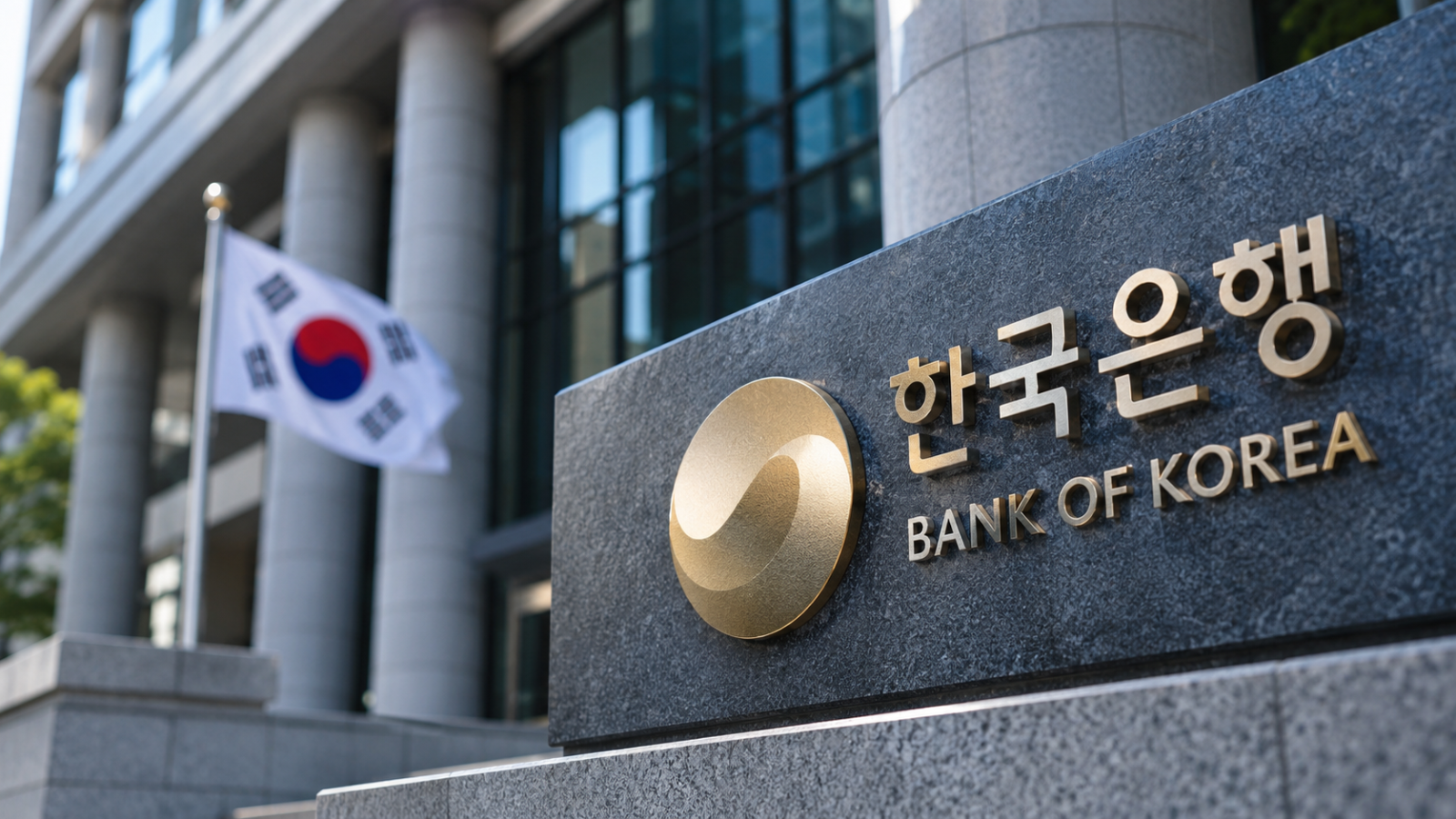
The Bank of Korea (BOK) began surveying 18 banks and 13 securities firms on October 23, seeking information about their involvement in the cryptocurrency industry and the measures they have established to manage financial risks. Institutions have until November 4 to submit their responses, with the findings expected to inform the central bank's assessment of the sector.
The review is the first reported survey of its kind conducted by the BOK and comes as South Korean financial institutions increasingly explore stablecoins, blockchain payments and cryptocurrency investment services. Officials are particularly interested in understanding how developments in digital asset markets could affect established banking businesses and the wider financial system.
Major South Korean Banks Face Cryptocurrency Risk Assessment
The survey includes South Korea's five largest banks, KB Kookmin, Shinhan, Hana, Woori and NH NongHyup, alongside other lenders and 13 securities companies. Each institution has been asked to provide details of its cryptocurrency-related operations, including organisational structures, staffing levels, budgets and investment commitments.
The central bank is also examining companies' existing digital asset services and their plans for entering new areas of the market. Financial institutions must explain their reasons for pursuing cryptocurrency activities and disclose investments in domestic and international businesses operating within the sector.
A Bank of Korea official explained that financial institutions were preparing to enter the digital asset market despite slower-than-anticipated progress on cryptocurrency legislation. The official said the survey's purpose was to take stock of existing activities and develop an early understanding of potential developments.
The information will be used as internal reference material, helping the central bank identify emerging risks that may not be adequately captured through conventional financial reporting requirements.
Exchange Hacks And Market Crashes Under Scrutiny
A significant part of the questionnaire focuses on scenarios that could disrupt cryptocurrency markets and expose financial institutions to unexpected losses.
One scenario asks respondents to assess the consequences of South Korea's largest cryptocurrency exchange temporarily suspending operations following a major cyberattack. Another considers the impact of a substantial decline in Bitcoin and other digital asset prices, particularly if falling valuations are accompanied by an extended reduction in trading activity.
The central bank is also investigating whether significant cryptocurrency-related losses at one financial institution could create financial difficulties for other businesses. This reflects concerns about the growing connections between traditional financial services and cryptocurrency markets.
The review follows heightened attention to exchange security after Binance disclosed a major cyberattack on October 29 involving approximately $6.3 billion in digital assets. The exchange confirmed that its hot wallets had been compromised and subsequently announced measures to cover the financial losses and recover affected assets.
However, the Bank of Korea's questionnaire was distributed six days before the Binance incident, meaning the review was already underway when the attack occurred.
The wider issue of cybersecurity has attracted increasing regulatory attention in South Korea, with authorities identifying security deficiencies across numerous financial businesses during recent inspections.
Banks Expand Stablecoin And Blockchain Payment Services
The review comes as South Korean banks and financial technology companies continue developing cryptocurrency-related products, particularly stablecoins designed for payments and financial transfers.
In September, Kakao Pay and KakaoBank entered into an agreement with digital asset infrastructure provider Fireblocks to explore stablecoin technology. The partnership includes technical trials and potential digital asset distribution arrangements, although the companies have not announced a commercial stablecoin launch.
Gwangju Bank and financial technology company Toss also completed stablecoin payment testing in October, examining how blockchain-based transfers could be integrated with QR code payments and existing banking applications.
Meanwhile, international cryptocurrency payments company MoonPay has been exploring opportunities in South Korea, including potential partnerships with Woori Bank, KB Financial Group and KakaoBank. Its plans involve stablecoin payments, international remittances and supporting digital asset infrastructure.
These developments have continued despite uncertainty surrounding South Korea's proposed stablecoin regulations. Lawmakers and financial authorities have been discussing how won-denominated stablecoins should be supervised, including whether issuance should be restricted to banks or extended to nonbank financial companies.
The outcome of those discussions could influence how traditional financial institutions participate in the cryptocurrency industry and the regulatory obligations attached to their services.
Central Bank Warns Of Growing Financial Market Connections
The Bank of Korea has previously raised concerns about the increasing relationship between cryptocurrency markets and traditional financial assets.
In its June 2026 Financial Stability Report, the central bank examined how digital asset prices had become more closely correlated with stock markets during periods of financial uncertainty. The analysis highlighted heightened correlations during the COVID-19 pandemic and the global interest rate increases of 2022.
The report also indicated that connections between cryptocurrency and equity markets remained elevated following the introduction of spot Bitcoin exchange-traded funds in the United States in 2024.
Separately, a November 2025 assessment of won-denominated stablecoins identified potential financial stability concerns involving collateral shortages, short-term interest rate volatility and the transmission of risks between cryptocurrency markets and conventional banking systems.
The central bank has acknowledged that existing supervisory reporting provides substantial information about traditional financial activities but offers less visibility into banks' growing cryptocurrency operations.
By collecting more detailed information from individual institutions, the BOK intends to strengthen its understanding of digital asset exposure and assess whether current risk management arrangements are sufficient.
The November 4 submission deadline will mark the completion of the initial information-gathering exercise. No findings have yet been released, and the survey itself does not introduce new restrictions on cryptocurrency activities.
As South Korea's financial institutions continue expanding their digital asset ambitions, the review represents an early effort to identify potential vulnerabilities before cryptocurrency services become more deeply integrated into the country's banking system.
Related reading

Brazil’s Crypto Licensing Applications Fall Short Of Expectations
Brazil’s new cryptocurrency licensing framework has attracted significantly fewer applicants than anticipated, with approximately 40 institutions identified ahead of the October 30 deadline as stricter regulatory requirements reshape the country’s digital asset industry.
iG Crypto News · 2 November 2026

Trump Responds to Binance Hack as Pressure Builds for US Crypto Rules
Speaking at a press conference on Friday, Trump said he was looking into the attack and noted Binance’s commitment to returning customers’ funds.
iG Crypto News · 2 November 2026

North Korean Hackers Linked to Record $6.3bn Binance Crypto Theft
Binance has pledged to cover customer losses after a $6.3bn breach that blockchain analysts link to North Korea's TraderTraitor group.
iG Crypto News · 30 October 2026

Crypto regulation watch: licensing gains meet security and enforcement pressure
Crypto’s regulatory picture on 30 October 2026 combines broader institutional access with unresolved legislative disputes, anti-money laundering scrutiny and persistent security risks.
iG Crypto News Research · 30 October 2026